
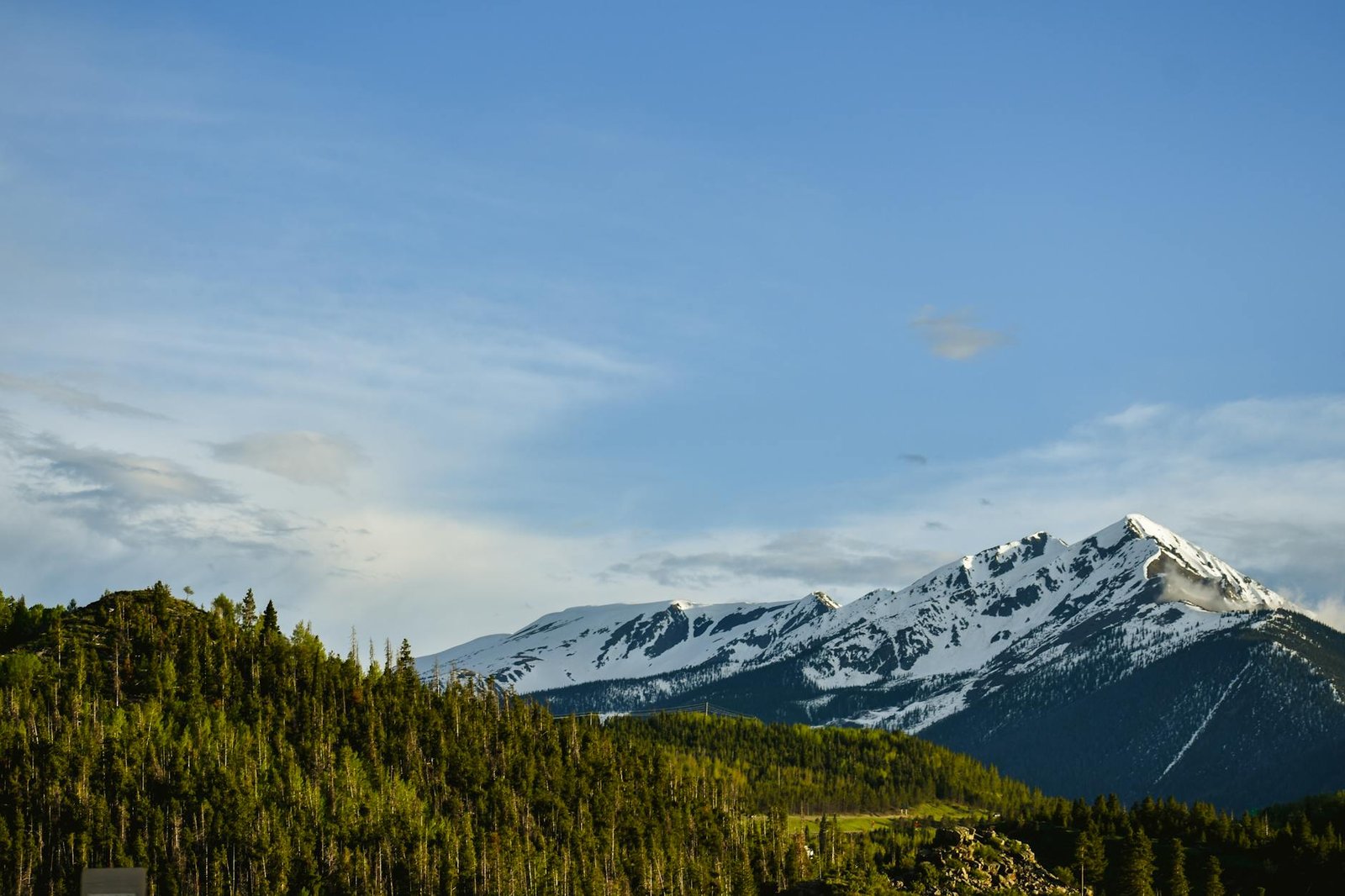
From Blood and Fire
The Sacred Hunting Rituals That Have Bound Humans to the Wild Since the Beginning
— — —
Introduction: We Were Always More Than Just Hunters
Close your eyes for a second and picture this: it’s well before dawn, somewhere in the mountains. Your breath clouds in the cold air. Your heart is already running faster than your legs. The world is dark and silent except for the wind moving through the timber, and you are completely, utterly alive in a way that ordinary life rarely allows.
You’ve been here before. Maybe not this exact ridge, this exact morning — but this moment. This particular quality of aliveness.
So has every human being who ever walked the earth.
For as long as our species has existed, we have hunted. Not just for meat, though the meat kept us alive. Not just for hides and bone and sinew, though those things built our shelters and our tools and our clothing. We hunted because something in the hunt reached down into the deepest part of what we are and pulled it to the surface. We hunted because the animal on the other end of the spear — or the arrow, or the rifle — was not just food. It was a gift. A covenant. A conversation between the human world and something much older and larger than us.
Every culture that has ever lived close to the land understood this. And almost every one of them built rituals around it — ceremonies of preparation, of pursuit, of gratitude, of mourning — because they knew instinctively what we sometimes forget in the modern world: that taking a life, even to sustain your own, is a sacred act. It demands something of you. It asks you to pay attention, to say thank you, to waste nothing, and to remember that you are not separate from the wild. You are part of it.
This is the story of those rituals. From painted cave walls in prehistoric France to the blood-soaked cliffs of the Montana high plains, from Mongolian shamans bargaining with animal spirits to European nobility processing their kills by torchlight — humans across every culture and every era have found their own way to say the same thing:
We did not take this lightly. We are grateful. We remember.
— — —
Part One: The Ancient World — When the Hunt Was Holy
The Caves Were Not Art Galleries
About 17,000 years ago, deep in what is now southwestern France, someone crawled through a narrow limestone passage with a torch and painted a bull on the wall.
We call it art now. We put it in textbooks and hang reproductions in museums. But the people who made it — the Paleolithic hunters of Lascaux, of Altamira, of Chauvet — almost certainly had something else entirely in mind.
Leading archaeologists now believe these caves were not galleries. They were sanctuaries. The images of bison and horses and deer and aurochs painted in the deepest, most inaccessible chambers weren’t decoration — they were ceremony. The flickering torchlight would have made the animals seem to move on the stone walls. The acoustics deep in these caves are extraordinary; some chambers produce sounds that vibrate in the chest like a drum. Researchers believe hunters gathered in these spaces before a hunt to perform rituals — to visualize the kill, to ask permission, to make themselves spiritually ready for what was about to happen.
They were praying. They were doing what humans have done before every significant, dangerous, life-or-death undertaking ever since: they were asking for help from something bigger than themselves.
The San Bushmen: The Oldest Conversation Still Happening
On the other side of the world, in the Kalahari Desert of southern Africa, the San Bushmen have been hunting for longer than almost any culture on earth — their genetic and cultural lineage stretches back over 100,000 years, making them one of humanity’s oldest continuous civilizations.
And they have never hunted without ceremony.
Before a significant hunt, San hunters perform the trance dance — hours of rhythmic movement, breathing, and song designed to carry the dancer into an altered spiritual state. In that state, they believe they enter the spirit world and negotiate directly with the animals they intend to pursue. They are not just asking for luck. They are asking for permission. The animal, in their worldview, has a say in whether it is taken.
After a successful hunt, the dance happens again — this time in gratitude, this time to help the animal’s spirit make its passage safely. The San don’t separate the physical world of the hunt from the spiritual world of the ceremony. To them, they are the same world. The arrow and the prayer are the same gesture.
What’s remarkable is that this isn’t history. San communities in southern Africa still practice these traditions today. The oldest conversation in hunting culture is still being held.
Assyrian Kings and the Divine Duty to Kill
By 700 BCE, the Assyrian empire had turned hunting into high theater — but the sacred undercurrent was still there, running beneath the spectacle.
The famous lion hunt reliefs carved into the walls of the royal palace at Nineveh — now among the most celebrated works of art in the British Museum — depict the Assyrian king Ashurbanipal engaged in the ceremonial killing of lions. What looks to modern eyes like a display of power was, to the Assyrians, something closer to a religious obligation. The king was not hunting for sport. He was fulfilling a cosmic duty: maintaining order between the human world and the wild one, acting as the gods’ representative in the physical realm.
The lion was not just prey. It was a worthy adversary, a symbol of chaos and power, and killing it was an act of sacred service. The reliefs show the wounded lions with an emotional complexity that is startling even today — the artists clearly felt something for these animals. There is grief in those stone faces. There is acknowledgment. The Assyrians were ruthless empire builders, but even they understood that what happened between hunter and hunted was not simple, and not casual.
Montana’s Sacred Cliffs: The Pishkun
Say the word out loud: pishkun.
It comes from the Blackfoot language, and it translates — roughly, imperfectly, but viscerally — as “deep blood kettle.”
Stand at the edge of the cliff at First Peoples Buffalo Jump State Park, just outside Great Falls, Montana, and the name makes complete sense. Below you, the sandstone drops thirty to fifty feet to the plains. The cliff face stretches for nearly a mile in either direction. And beneath the soil at the base of that cliff, compressed by centuries, lie up to eighteen feet of compacted bison bone — the physical remains of tens of thousands of animals and thousands of years of hunting on the high plains.
This is not a metaphor. You are standing on the bones of the past.
First Peoples Buffalo Jump is considered possibly the largest bison cliff jump in North America, and a National Historic Landmark — but Montana alone has more than 300 documented buffalo kill sites. This was not a rare event. This was how people lived. For the tribes of the northern plains — the Blackfoot, the Crow, the Salish, the Shoshone, the Gros Ventres and many more — the pishkun was the center of survival, culture, ceremony, and community. The buffalo didn’t just feed them. The buffalo was them. Hide for clothing and shelter. Bone for tools and weapons. Sinew for bowstrings. Fat for cooking and warmth. Every single part of the animal had a purpose, and wasting any of it would have been not just impractical — it would have been a moral failure, a spiritual offense against the animal that gave itself.
But before any of that could happen, the hunt itself had to be earned.
The Runners
The men chosen to lead the drive to the cliff were called runners — and the name undersells what they actually were. These were the most physically gifted, most courageous young men in the band, trained from boyhood for speed, endurance, and nerve. On the day of a drive, some wore the hides of buffalo calves or wolf skins, moving among the herd on all fours, slowly coaxing the animals in the right direction. It could take hours. It could take days. The herd had to be moved carefully, without panic, guided by low rock walls and stone cairns — over 1,400 of which still stand at First Peoples Buffalo Jump, forming 47 distinct drive lines stretching for miles across the plateau above the cliff.
When the moment came, the runners would drop their disguise, rise to their feet, and run — screaming, waving, pushing the stampede forward. Their job was to stay just ahead of thousands of pounds of terrified bison bearing down on them at full gallop, and to jump clear at the last second while the herd went over the edge. There was no margin for error. There was no second chance. These men were not performing a task. They were making an offering of their own courage, their own bodies, their own lives held against the wire — on behalf of everyone waiting below.
The Gathering
What happened at the base of the cliff after a successful drive was not chaos, even though it must have looked like it from a distance. It was organized, purposeful, and deeply communal. Women, children, and elders moved through the fallen animals, finishing those still living, beginning the processing that would take days. The work was divided by role, by family, by tradition. Every person had a place in the ceremony of the kill.
And it was a ceremony. The tipi rings still visible at First Peoples Buffalo Jump tell us that families didn’t just come to hunt and leave — they camped here for weeks. They held reunions. They celebrated marriages. They performed religious rituals. The pishkun wasn’t just a hunting site. It was a gathering place, a sacred ground, a place where the entire community came together around the act of taking and receiving life.
Following the hunt, prayers were offered and ceremony was performed — always — to thank the animals for giving their lives to sustain the people. The bison was not a resource to be extracted. It was a relative, of a kind. A being that had agreed, in the spiritual understanding of these cultures, to give itself so that the people could live. That agreement carried obligations. It demanded gratitude. It demanded respect. It demanded that nothing be wasted.
The Cooperation
Here is perhaps the most extraordinary detail of the pishkun tradition: the Madison Buffalo Jump near Three Forks — another of Montana’s protected jump sites, used for nearly 2,000 years — was not used exclusively by one tribe. The Hidatsa, Shoshone, Lakota, Nez Perce, Blackfeet, Crow, Salish, Cheyenne, Assiniboine, Cree, and others all used this cliff. Sometimes simultaneously. Nations that were rivals, sometimes enemies, set aside their conflicts to hunt together at the sacred cliff.
Let that land for a moment. The hunt — the shared necessity, the shared ceremony, the shared covenant with the animal — was powerful enough to create peace between peoples who had every other reason for war. The pishkun was a place where survival outranked politics, where the spiritual gravity of the hunt pulled everyone into the same orbit.
When you walk the plateau above First Peoples Buffalo Jump today and look out over the Rocky Mountain Front and the Missouri River valley spreading out below you in every direction, it is genuinely difficult not to feel it — the weight of all those years, all those people, all that ceremony accumulated in the soil beneath your feet. This ground is not neutral. It never was.
— — —
Part Two: Asking Permission — The Universal Covenant with Prey
You Must Ask Before You Take
There is a thread that runs through virtually every hunting culture that has ever existed on this earth, from the frozen Arctic to the jungles of the Pacific Rim, from the steppes of Central Asia to the forests of northern Japan. It doesn’t matter what language they spoke, what gods they named, or what weapons they carried. The thread is the same:
Before you hunt, you ask.
Not as a formality. Not as superstition. As a genuine, earnest negotiation with the animal world — an acknowledgment that the creatures you are about to pursue have their own existence, their own spiritual weight, their own say in what is about to happen. The idea that a hunter could simply go out and take — without preparation, without permission, without establishing some kind of spiritual contract with the prey — would have struck most of humanity’s hunting cultures as not just reckless, but deeply wrong.
Wrong in the way that stealing is wrong. Wrong in the way that ingratitude is wrong.
This wasn’t weakness or naivety. These were people who understood survival at a level most of us never will. They read weather, tracked animals across frozen ground, fed their families in conditions that would kill the average modern person in days. They were pragmatists of the highest order. And still — maybe because of that — they built elaborate ceremonies of asking into the very structure of the hunt. Because they knew something that is easy to forget when your food comes wrapped in plastic: every meal that ever sustained a human life came at the cost of another life. That transaction deserves acknowledgment. It always has.
The Shamans of Siberia and Mongolia: Bargaining with the Master of Animals
Stretch your imagination across the vast frozen grasslands of Siberia and Mongolia — a landscape so enormous and so indifferent to human life that surviving it required not just skill, but a working relationship with forces you could not see or fully understand.
The shamanic hunting traditions of the Siberian and Mongolian peoples developed over thousands of years in exactly this crucible. At the center of those traditions was a figure — the shaman — who served as the negotiator between the human world and the spirit world. Before a significant hunt, the shaman would enter a trance state, often aided by drumming, chanting, and sometimes plant medicines, and travel in spirit to the realm of the Master of Animals — a powerful spirit being understood as the sovereign of all wild creatures.
The negotiation was real. The shaman would argue, persuade, offer, and sometimes plead for the right to take certain animals. The Master of Animals might grant permission or withhold it. If the hunt was successful, it was understood that the animals had chosen to give themselves — that they had, at some level, agreed to be taken. If the hunt failed, it meant the permission had been denied, and the community would look inward: had they been wasteful with previous kills? Had they failed to perform the proper rituals of gratitude? Had they taken more than they needed?
The hunt was a mirror. It reflected back the spiritual health of the community.
This framework created something extraordinary: a built-in conservation ethic rooted entirely in spiritual obligation. You didn’t overhunt because overhunting was a moral failure — a breach of the covenant with the Master of Animals that would cause the animals to withdraw, the hunts to fail, and the people to starve. Thousands of years before the concept of wildlife management existed, these cultures had arrived at the same conclusion through a completely different door.
The Ainu of Japan: When the Bear Comes Home
On the northern Japanese island of Hokkaido, the Ainu people developed one of the most profound and — to outside eyes — most paradoxical hunting traditions in human history.
They raised bears.
Not as livestock. Not as pets, exactly. As honored guests. As temporary vessels for a divine spirit that had come down from the spirit world to visit the human one, clothed in the body of a bear. A bear cub captured in the wild would be brought into the village and raised among the people — fed, cared for, sometimes nursed by human women alongside their own children — for anywhere from two to three years. The bear was treated with genuine affection and respect during this time. It was beloved.
And then it was ritually sacrificed.
The ceremony was called Iyomante — the sending away — and it was understood not as killing, but as liberation. The bear’s spirit, which had been visiting the human world in animal form, was now being sent home to the divine realm, carrying with it the gifts and prayers of the community. The physical body was treated with the deepest reverence: specific prayers were spoken, the meat was eaten in a ceremonial feast, and the skull was enshrined and honored long after the ceremony ended.
What looks to modern Western eyes like contradiction — loving something and then killing it — was, to the Ainu, a seamless spiritual logic. The bear had given itself willingly. It had lived among the people, known them, been known by them. The Iyomante was the fulfillment of a covenant, not a betrayal of one. The grief was real. The gratitude was real. Both things were true at once.
In that paradox lives one of the most honest understandings of hunting ever articulated: that love and killing are not opposites. That you can hold deep reverence for something and still take its life to sustain your own — and that the reverence is what makes the taking bearable, and sacred, and right.
The Inuit: Water for the Returning Spirit
At the top of the world, where the Arctic Ocean meets the ice and the margin between life and death is measured in degrees and hours, the Inuit built their hunting rituals around a single, governing idea: the animals are watching.
Not with suspicion, exactly. With attention. With awareness of how they are being treated.
In Inuit spiritual understanding, the souls of animals do not simply disappear when the body dies. They linger, observing what happens next — watching whether their sacrifice is honored or wasted, whether the hunter is grateful or careless. And based on what they see, they decide whether to return. A seal whose spirit is treated with respect will be reborn and will offer itself again. A seal whose spirit is dishonored will warn the others, and the hunters will find only empty water.
The practical expression of this belief was strikingly simple and beautiful: after killing a seal, the hunter would pour fresh water into the animal’s mouth. The seal, a creature of salt water, was understood to be perpetually thirsty for the fresh water it could never drink in life. Offering it water was an act of care — of intimate, personal kindness extended to the animal in the moment after its death. It said: I see you. I know what you gave. I am taking care of you now.
Other Inuit traditions included returning certain bones to the sea — particularly the skull — so that the animal’s spirit would have what it needed to be reborn complete. Bladder festivals held in winter were ceremonies specifically designed to honor the spirits of all the animals taken during the year, sending them back to the ocean satisfied and whole, ensuring the hunts of the coming season.
Every ritual was a conversation. Every gesture was a promise kept.
Indigenous North America: Tobacco, Sweat Lodges, and the Permission of the Animal
Across the vast diversity of Indigenous North American hunting cultures — from the Pacific Northwest to the Gulf Coast, from the Great Lakes to the Sonoran Desert — the specific forms of pre-hunt ceremony varied enormously. But the underlying logic was nearly universal.
You prepared your body. You prepared your spirit. And you asked.
Sweat lodge ceremonies served to purify the hunter — stripping away the smells, the anxieties, the distractions of ordinary life, making the hunter clean and present and worthy of the encounter to come. Tobacco, considered sacred across many nations, was offered to the four directions, to the earth, to the animal itself — a physical act of acknowledgment and prayer. Vision quests sent young hunters alone into the wilderness for days without food or water, seeking a spiritual encounter that would give them a relationship with the animal world before they ever picked up a weapon.
Among many Plains nations, a hunter who killed an elk or a deer would kneel beside the animal immediately after the shot and speak to it directly. Not metaphorically. Not as a figure of speech. They would speak the animal’s name, acknowledge what it had given, and offer their thanks out loud, in words, as if the animal could still hear — because in their understanding, it could. The spirit had not yet left. The moment of death was a liminal space, a threshold moment, and what happened in that moment mattered.
This wasn’t ritual for ritual’s sake. It was a technology of relationship — a way of maintaining the covenant between hunter and hunted across generations, keeping the agreement alive, keeping the animals willing to return.
It still happens today. On reservations and in backcountry camps and in the quiet moments after a kill when a hunter kneels in the grass and doesn’t quite know why they feel the need to say something — the oldest instincts in our species are still running, still reaching for the same acknowledgment they always have.
I see you. I’m grateful. I won’t waste this.
— — —
Part Three: Blood on the Ground — Post-Kill Rituals and Gratitude
The Ceremony Begins When the Animal Falls
Here is something that the modern world has largely lost, and that nearly every traditional hunting culture on earth understood with complete clarity:
The kill is not the end of the hunt. It is the beginning of the most important part.
The moment an animal hits the ground is not a moment of triumph to be celebrated with noise and congratulation. It is a threshold moment — solemn, weighted, charged with obligation. The animal has given something irreplaceable. What happens in the minutes and hours that follow will determine whether that gift was received with the dignity it deserved, or squandered. Whether the covenant was honored, or broken.
Across cultures separated by oceans and centuries, humans have understood this instinctively. And they have built ceremonies around it — specific, deliberate acts of acknowledgment and gratitude — that transform the practical work of butchering and processing an animal into something closer to a sacred rite. The details differ. The impulse is identical.
The Forest Cathedral: Medieval European Hunting Traditions
Long before the medieval period, the forests of Europe were already sacred spaces. The Celts and their Druidic traditions held the woodland as the dwelling place of gods and spirits. Cernunnos — the antlered god, the lord of wild things — watched over the boundary between the human world and the animal one. To enter the forest to hunt was to step across that boundary, into a space governed by different rules, different obligations. You went in as a person. You came out changed.
By the medieval period, European nobility had inherited these deep spiritual roots and formalized them into something extraordinarily elaborate — a hunting tradition so structured and ceremonially precise that it functioned, in many ways, like a liturgy. Every phase of the hunt had its prescribed behavior, its proper form, its specific signals and gestures. Done correctly, a medieval hunt was less like a sporting event and more like a church service held in the cathedral of the forest.
And the most important part of that service happened after the kill.
The Streckenlegen: Laying Out the Dead
Imagine the light is fading. The hunt has been successful. Now, at the edge of a clearing, the real ceremony begins.
The Streckenlegen — the game bag ceremony — was the formal laying out of the day’s kill, and it was performed with a precision and reverence that would not look out of place in a house of worship. The animals were arranged on their right sides on beds of fresh pine boughs, organized by species and size in a specific, prescribed order. Torches or fires were lit around the perimeter of the display. The hunters assembled in silence.
This was not a trophy presentation. It was not a boast. It was an acknowledgment — a formal, communal recognition that lives had been taken, that the forest had given something, and that the people who stood in that firelit clearing were obligated to receive that gift with solemnity. The pine branches beneath the animals were not decorative. Pine, in European woodland tradition, was associated with the eternal — it stays green through winter, through death, through the cold. Laying the animals on pine was a gesture of honor, a way of saying: what happened here matters. We are not casual about this.
The hunters stood and looked at what they had taken. They did not look away.
The Last Bite and the Sprig on the Hat
Two gestures from the European tradition deserve to be lifted out and examined on their own, because each one carries more meaning than its simplicity suggests.
The first is the Last Bite.
After the kill, a hunter would cut a small twig — often pine, sometimes oak or whatever the forest offered — and place it gently in the mouth of the downed animal. A final meal. A last gift from the forest the animal had lived in, offered by the hand of the person who had taken its life. The gesture is so quiet, so small, and yet it contains an entire worldview: the animal was a living being that deserved to be cared for, even in death. The hunt was not over until that small act of tenderness had been performed.
The second gesture was the sprig on the hat.
After placing greenery on the animal, the hunter would take another small branch and place it on their own hat or in their own buttonhole. This was not decoration. It was a mark — a visible, physical acknowledgment that the hunter had been changed by what had just happened. They were carrying a piece of the animal’s world on their own body. They were saying, to anyone who saw them: I took a life today. I carry that with me. I do not pretend it was nothing.
Lay these two gestures beside the Inuit hunter pouring fresh water into the seal’s mouth. Lay them beside the Plains Indian kneeling in the grass to speak the animal’s name. The specific forms are different. The spiritual grammar is identical. Something was taken. Something is owed. This small gesture is the beginning of the payment.
The Hunting Horn: A Liturgy in Sound
In the medieval European tradition, the hunt was narrated in sound as much as action. Specific horn calls — precise, memorized, passed down through generations of hunters — marked every phase of the day. There was a call for the beginning of the chase, a call for the sighting of the quarry, a call for the kill, a call for the end of the hunt. Each one announced to everyone within earshot exactly where the hunt stood in its ceremonial progression.
This is not so different from the bells of a church marking the hours of prayer, or the drumbeat that opens a San trance dance, or the songs that Hadza hunters in Tanzania bring back to camp with the meat. Sound, in hunting ritual across cultures, serves a specific purpose: it marks time as sacred. It says, pay attention — something significant is happening here. It pulls the participants out of the ordinary flow of the day and into a heightened, ceremonial awareness.
The horn calls of the medieval hunt were a liturgy. The forest was the church. The hunters were the congregation. And the animal — honored in death, laid on pine boughs in the firelight — was the reason they had all gathered.
The Par Force Hunt: When the Chase Was the Prayer
The preferred hunting method of medieval European nobility wasn’t the ambush or the trap. It was the par force hunt — a method built entirely around the extended, ritualized chase. Riders on horseback, packs of hounds, hours of pursuit across open country. The emphasis was not on killing quickly and efficiently. It was on the chase itself — on the sustained, demanding engagement with the animal over time and distance.
This seems, on the surface, like the opposite of mercy. But look at it from another angle: the par force hunt said something specific about the relationship between hunter and prey. It said that the animal deserved a worthy opponent. That a quick, easy kill was somehow insufficient — that the full ceremony of the hunt required genuine effort, genuine risk, genuine engagement. The animal was not simply a target. It was a participant. And the hunt would not be complete until both parties had given everything they had.
There is something in this that echoes across cultures. The Assyrian king who faced the lion personally rather than from behind a barrier. The Blackfoot runner who put his body between the stampeding herd and the cliff edge. The San hunter who tracked an animal for days across the Kalahari on foot, running it to exhaustion in a practice called persistence hunting. In each case, the hunter’s willingness to take on difficulty and danger was itself a form of respect — a way of saying that what was being pursued was worthy, that the taking of it demanded something real in return.
The Hadza of Tanzania: Song, Fire, and the Communal Feast
On the other side of the world from the firelit clearings of medieval Europe, in the open savanna of northern Tanzania, the Hadza people have been living as hunter-gatherers for longer than almost any group on earth. Their hunting traditions are among the most ancient still practiced by living humans — a direct, unbroken line back to the deepest roots of our species.
When a Hadza hunter makes a successful kill, he does not carry the animal back to camp and present it as his own achievement. The kill belongs to everyone. And the return to camp with meat triggers something immediate and communal: singing, dancing, and a specific ceremonial process of butchering and distributing the animal that follows rules older than anyone alive can remember.
The order in which different parts of the animal are distributed — who receives which cuts, in what sequence, according to what social roles — is not arbitrary. It is a map of the community’s relationships, obligations, and values, expressed through the body of the animal. The hunt becomes a kind of social ceremony, a reaffirmation of the bonds that hold the group together, conducted through the shared act of receiving what the animal has given.
No part is wasted. Every piece has a destination. The animal’s gift is distributed until there is nothing left to distribute.
The Norse and the First Kill: Giving Back to the Gods
In the Norse and Germanic traditions that spread across northern Europe for centuries, the first kill of any significant hunt was not kept. It was given away.
Offered back to the gods — to Odin, the all-father, who in some traditions rode at the head of the Wild Hunt across the winter sky; to the spirits of the forest; to the land itself. The first animal taken was a tithe, a payment made before any benefit was received, an acknowledgment that the hunter operated within a larger economy of give and take that extended far beyond the human world.
This tradition — the offering of first fruits, first kills, first harvests back to the divine — appears across virtually every ancient culture on earth. It is so widespread, so consistent across peoples who had no contact with each other, that it suggests something almost hardwired in the human response to abundance: the instinct to give some of it back before you keep any of it. The instinct to say, before anything else: this came from somewhere beyond me, and I acknowledge that.
It is the oldest form of gratitude humans ever invented.
One Thread, Woven Through All of It
Stand back and look at all of this together — the Streckenlegen in the firelight, the Last Bite, the Inuit’s fresh water, the Plains Indian’s spoken prayer, the Hadza’s communal song, the Norse hunter’s first kill offered back to Odin — and something becomes very clear.
These people were not performing superstitions. They were not going through motions they didn’t understand. They were practicing a sophisticated, deeply considered ethics of taking — a set of principles for how to receive the gift of an animal’s life with the dignity that gift deserves.
Don’t take without asking. Don’t receive without thanking. Don’t waste what was given at cost. Acknowledge, in some specific and deliberate way, that what happened here was not nothing — that a life ended so yours could continue, and that this transaction carries weight.
The forms change. The language changes. The gods have different names in different centuries and on different continents. But the ethics underneath all of it — the conviction that the hunt is sacred, that the animal deserves reverence, that the hunter carries an obligation that doesn’t end when the arrow flies — that part never changes.
It never has. And in the quiet moment after every honest kill, when a hunter kneels in the grass or the snow or the sage and feels something they don’t quite have words for — it still doesn’t.
— — —
Part Four: The Sacred Role of the Hunter in Society
The Hunter Was Never Just a Hunter
In the modern world, we have a tendency to sort things into neat categories. The hunter is the person who gets the meat. The priest is the person who tends to the spiritual life of the community. The soldier defends it. The farmer feeds it. We have divided up the work of being human into separate roles, separate professions, separate identities.
For most of human history, that division didn’t exist. Not in the way we understand it now.
The hunter — in culture after culture, on continent after continent, across thousands of years of human civilization — occupied a role that blurred every one of those lines simultaneously. They were the food provider, yes. But they were also the spiritual intermediary, the community protector, the keeper of ecological knowledge, the living embodiment of the relationship between the human world and the wild one. They moved between worlds that most people in their community never entered. They went out into the wilderness — the place beyond the fire, beyond the fence, beyond the known — and they came back with what the community needed to survive.
That journey, out and back, across the boundary between the tame and the wild, the human and the animal, the living and the dead — it marked the hunter as something more than a laborer. It marked them as a threshold person. Someone who lived, at least part of the time, in the space between worlds.
Every culture that understood this built it into the way they treated their hunters, the way they talked about hunting, and the ceremonies they constructed around it. The hunter wasn’t just doing a job. They were fulfilling a sacred function — maintaining the relationship between their people and the wild world that sustained them. And when that relationship was healthy, when the ceremonies were performed and the covenants honored, the community thrived. When it broke down, everything suffered.
Cernunnos and the Celts: The Horned God at the Edge of the World
In the ancient Celtic world, the boundary between civilization and wilderness was not just a geographical line. It was a spiritual one.
The forest — dense, dark, ungoverned by human law — was the dwelling place of gods and spirits and forces that operated by rules humans could sense but not fully understand. To enter it was to leave the human world behind and step into something older and more powerful. The Druids, who served as the spiritual and intellectual class of Celtic society, understood the forest as a place of revelation — a living temple where the boundaries between the physical and spiritual worlds were thin enough to walk through.
At the center of the Celtic relationship with the wild world stood Cernunnos — the Horned One. Depicted on the famous Gundestrup Cauldron and in carved stones across Celtic Europe, he appears seated in a cross-legged posture, wearing or sprouting the antlers of a stag, surrounded by animals. He is neither fully human nor fully animal. He is the point where those two worlds meet.
Cernunnos was not simply a god of hunting. He was the god of wildness itself — of the untamed, the fertile, the cyclical, the part of existence that refuses to be domesticated. He presided over the boundary that the hunter crossed every time they entered the forest. And the hunter, in the Celtic worldview, was his representative in the human world — the person whose work and whose courage kept the relationship between civilization and wilderness alive and functional.
To hunt in the Celtic tradition was to participate in something cosmological. The stag was not just prey. It was an emissary from the world of Cernunnos, and killing it correctly — with skill, with respect, with proper ceremony — was an act of participation in the great cycle of life and death and renewal that the Horned God presided over. To hunt carelessly, wastefully, without ceremony, was not just bad practice. It was a rupture in the cosmic order.
The hunter who did their work well was, in a very real sense, a priest.
Artemis and the Greeks: The Goddess Who Demanded Everything
The ancient Greeks understood hunting as a discipline — a rigorous, demanding practice that shaped the body, the mind, and the character of the person who pursued it seriously. And they placed it under the protection of one of their most formidable deities.
Artemis — goddess of the hunt, of the wilderness, of the moon — was not a gentle patron. She was exacting, fierce, and entirely without mercy toward those who failed to honor her properly. The myths surrounding her are full of hunters destroyed by their own arrogance or carelessness: Actaeon, who stumbled upon her bathing and was transformed into a stag and torn apart by his own hounds. Orion, her greatest hunting companion, killed — in some versions of the myth — by her own hand when the relationship between them became unbalanced.
The message was consistent and unambiguous: the hunt is a gift, and the goddess who gives it demands something in return. Specifically, she demands reverence. Hunters were obligated to offer the first kill of every hunt at the altar of Artemis before they could claim any of it for themselves. To neglect this offering was to invite catastrophe — not as a metaphor, but as a literal expectation of divine retribution.
What the Greeks encoded in mythology, every other culture we’ve examined encoded in ceremony. The form differs — altar instead of pine boughs, goddess instead of Master of Animals, formal temple offering instead of spoken prayer over a fallen elk — but the underlying demand is the same. Before you benefit from what the hunt provides, you acknowledge where it came from. You give something back. You make yourself accountable to a power larger than your own hunger and your own cleverness.
Artemis was also, significantly, the protector of young animals and the guardian of the wilderness itself. She was not simply pro-hunting. She was pro-balance. Hunters who operated within the proper relationship with the wild world were under her protection. Hunters who exceeded it — who took more than they needed, who killed without ceremony, who treated the hunt as conquest rather than covenant — were on their own. And in the Greek mythological imagination, being on your own against the wilderness, without divine protection, never ended well.
The Samurai and the Deer: Shinto, the Forest, and the Sacred Hunt
In feudal Japan, the relationship between the warrior class and the hunt was woven deeply into the fabric of Shinto — the indigenous spiritual tradition that understood the natural world as inhabited by kami, sacred spirits present in every mountain, river, tree, and animal.
For the samurai, hunting was not recreation. It was spiritual practice — a discipline that sharpened the skills needed in warfare while simultaneously deepening the hunter’s relationship with the natural world and its kami. The deer, in particular, held special spiritual significance in Japanese culture. At Nara’s Kasuga Grand Shrine, deer were considered divine messengers of the gods and were protected as sacred animals. The tension between the deer as sacred being and the deer as prey was not resolved by choosing one or the other — it was held, deliberately, as a spiritual complexity that the hunter was required to navigate with care.
Before entering the forest to hunt, samurai hunters would stop at forest shrines — small, often humble structures tucked beneath ancient trees — to offer prayers and ask the kami of the forest for permission to hunt within their domain. After a successful kill, offerings were left at the same shrines: gratitude made physical, the covenant renewed. The act of hunting was bracketed on both sides by ceremony, held within a spiritual frame that transformed it from mere killing into something closer to communion.
The Shinto understanding of the natural world as inherently sacred — not metaphorically, not symbolically, but actually inhabited by divine spirits — meant that every interaction with that world carried spiritual weight. The hunter who moved through the forest with awareness and reverence was engaging with the divine in one of its most direct forms. The hunter who moved through it carelessly was committing a kind of ongoing sacrilege.
The difference between hunting as sacred practice and hunting as mere extraction is not a matter of technique or equipment or even intention in the narrow sense. It is a matter of awareness — of whether the hunter understands themselves to be operating within a relationship that carries obligations, or simply taking what they can find. The samurai, at their best, understood the difference. The forest shrines they stopped at on the way in and the offerings they left on the way out were the physical expression of that understanding.
The Indigenous Australians: Hunting and the Dreaming
On the world’s oldest continent, the Aboriginal peoples of Australia developed one of the most sophisticated and enduring relationships between human culture and the natural world ever known — a relationship so deep and so comprehensive that it is difficult to fully describe in Western terms, because it doesn’t map neatly onto any Western category.
At the center of Aboriginal spiritual life is the concept of the Dreaming — sometimes called the Dreamtime — a dimension of existence that underlies and interpenetrates the physical world, containing the stories, laws, and creative forces that brought everything into being and continue to sustain it. The land itself is not just geography. It is a living record of the Dreaming, inscribed with the tracks and stories of ancestral beings whose journeys across the landscape in the time of creation established the patterns that all life still follows.
Hunting, in this context, is not separate from the Dreaming. It is an act within it — a participation in the ongoing creative and sustaining work of the ancestral forces. To hunt correctly — following the proper protocols, performing the proper ceremonies, taking only what is needed, maintaining the relationships and obligations that the Dreaming requires — is to help keep the world in balance. To hunt incorrectly is to damage something that extends far beyond the immediate moment.
Among the most significant of Aboriginal hunting ceremonies were the increase ceremonies — rituals performed not to ask for a good hunt, but to ensure that the animal populations would thrive and be abundant for future generations. Hunters would gather at sacred sites associated with particular species and perform ceremonies designed to increase the fertility and abundance of those animals.
Read that slowly, because it is remarkable: hunters performing ceremonies to increase the populations of the animals they hunted.
This is not a contradiction. It is the fullest possible expression of the hunter’s role as steward — as someone whose relationship with the animal world carries obligations not just to the present, but to the future. The hunter who performs an increase ceremony is not just thinking about today’s meal. They are thinking about their grandchildren’s meals, and their grandchildren’s grandchildren’s. They are taking responsibility, through ceremony and spiritual practice, for the long-term health of the ecosystem that sustains their people.
It is, in its own way, the most sophisticated conservation philosophy ever developed — and it emerged not from science or policy or environmental activism, but from a spiritual understanding of the hunter’s sacred role in the web of life.
The Hunter as Bridge
Look at all of these traditions together — Celtic, Greek, Japanese, Australian, and everything we have covered in the sections before this — and a single, clear picture emerges.
In every culture that lived close to the land, the hunter was understood to occupy a unique and irreplaceable position in the social and spiritual order. Not above others, but between — between the human world and the animal world, between the domestic and the wild, between the living and the dead, between the present generation and the ones that would follow.
That position carried weight. It carried responsibility. It required a specific kind of person — someone capable of moving through the wild world with skill and awareness, capable of taking a life with both competence and reverence, capable of maintaining the relationships and honoring the obligations that kept the whole system — human, animal, spiritual, ecological — in balance.
The hunter was the bridge. And the ceremonies, the rituals, the prayers before and after the kill — all of it was the maintenance work that kept the bridge standing.
When we lose those ceremonies, we don’t just lose interesting cultural traditions. We lose something structural. We lose the practices that kept hunters accountable to something larger than themselves, that embedded the act of hunting in a web of obligation and gratitude and reciprocity that extended in every direction — to the animal, to the land, to the community, to the past, to the future.
The bridge doesn’t disappear when the ceremonies stop. But it starts, quietly, to weaken.
— — —
Part Five: The Threads That Survived — Modern Hunting Ceremonies
Nothing Was Lost. Some Things Were Forgotten.
Here is something worth sitting with for a moment before we go any further.
Every tradition we have covered in this article — the San trance dance, the Ainu’s Iyomante, the Inuit’s water offering, the Streckenlegen in the firelight, the Blackfoot runner at the cliff’s edge, the samurai at the forest shrine — every single one of them was, at some point in history, in danger of disappearing. Colonization, modernization, religious conversion, the disruption of traditional ways of life by outside forces — all of it took a toll on the ceremonial structures that had held hunting cultures together for thousands of years.
And yet.
Walk into a hunting camp anywhere in the world today — in the mountains of Montana, in the savanna of Tanzania, in the forests of Scandinavia, in the high desert of the American Southwest — and you will find the thread. Maybe frayed. Maybe expressed in different language, stripped of its original ceremonial form, operating more as instinct than conscious ritual. But there. Still there. Still running beneath the surface of the hunt like a current beneath ice.
Because these things were never just cultural habits. They were responses to something real — to the actual experience of taking a life in the wild, of being present in the moment when an animal falls, of holding in your hands the physical fact of what just happened. That experience has not changed. It cannot change. And as long as humans hunt, the instincts it triggers — toward reverence, toward gratitude, toward some form of acknowledgment that this moment carries weight — will keep finding expression.
The ceremonies survived because they were never just ceremonies. They were the human species telling the truth about what hunting actually is.
The Moment of Silence: What Every Hunter Knows
Ask almost any serious hunter — not the ones who treat it as pure recreation, but the ones who have hunted long and hard and honestly — about the moment after a kill. The moment after the shot, after the animal is down, after the initial rush of adrenaline begins to subside.
Almost universally, they will describe the same thing.
Stillness. A kind of gravity that settles over the scene. An impulse — not learned, not taught, simply there — to stop. To kneel. To put a hand on the animal. To be quiet for a moment before anything else happens.
Nobody told most of these hunters to do this. They didn’t read about it in a hunting manual. They didn’t learn it in a hunter education course. It arrives unbidden, rising up from somewhere deeper than conscious thought, in the moment when the reality of what has just happened makes itself fully known.
This is the oldest hunting ritual in the world, still performing itself in the field, in the absence of any formal ceremony to contain it. It is the San hunter’s trance dance distilled to its essence. It is the Inuit’s water offering reduced to a single gesture — a hand on warm fur, a breath held, a moment of genuine acknowledgment before the practical work begins.
It is not nothing. It is everything. And the hunters who allow themselves to feel it fully — who don’t rush past it, who sit in it for as long as it asks — are participating in something that stretches back to the very beginning of our species, whether they know it or not.
The Ethics of Waste: An Ancient Law, Still Enforced
One of the most consistent threads running through every hunting tradition we have examined is the prohibition against waste. From the Plains Indians who used every part of the buffalo to the Hadza whose communal butchering left nothing behind to the medieval European hunters whose game bag ceremony formalized the respectful processing of every animal taken — the message is the same everywhere, in every era:
You do not waste what was given at cost.
This is not just practical wisdom, though it is that too. It is a moral principle — a direct expression of the covenant between hunter and hunted. The animal gave its life. To waste any part of that life is a betrayal of the gift, a violation of the agreement, an act of disrespect so fundamental that virtually every hunting culture that ever existed built explicit prohibitions against it into their spiritual and social codes.
In the modern hunting world, this ancient law survives — imperfectly, inconsistently, but recognizably. The commitment to recover every animal shot. The practice of using the meat, properly cared for and not wasted. The growing movement among hunters toward whole-animal butchering, toward making full use of the hide and the bone and the organ meat, toward treating the animal as a gift rather than a commodity.
Every time a hunter packs out every pound of meat from a backcountry kill — sweating under a heavy load, making multiple trips, refusing to leave anything behind — they are honoring a principle that the Blackfoot understood at the pishkun, that the Inuit understood on the Arctic ice, that the Hadza understand today on the Tanzanian savanna. The form is different. The obligation is identical.
Montana and the Backcountry: Sacred Ground Beneath Modern Boots
There is a specific quality to the country east of the Continental Divide in Montana — the Rocky Mountain Front, the high basins, the long ridges running north to south above timberline — that is difficult to describe to someone who hasn’t stood in it.
It is not just beautiful, though it is extraordinary. It is weighted. It carries something. The landscape feels inhabited by its own history in a way that most places don’t, as if the accumulated presence of every person who has ever moved through it — hunting, surviving, praying, dying — has left something behind in the rock and the grass and the wind.
This is not entirely imagination. The ground actually is inhabited by its history. The drive lines at First Peoples Buffalo Jump are still there, cairn by cairn, stretching across the plateau above the Missouri River. The tipi rings are still there. The bone middens are still there, eighteen feet deep, compressed beneath the soil. Every September, when the elk begin to bugle in the high basins and hunters start moving into the backcountry, they are walking into a landscape that has been a hunting ground for at least five thousand years — and probably much longer.
That continuity is not incidental. It is not just historical trivia. It is the context within which modern Montana hunting culture exists, whether the hunters who participate in it are consciously aware of it or not.
The spike camp at nine thousand feet — canvas wall tent, wood stove, horses on the picket line, the smell of coffee and canvas in the cold morning dark — is not so different, in its essential structure, from the camp the Blackfoot hunters made at the base of the pishkun. People gathered together, away from ordinary life, in a specific landscape, for the specific purpose of hunting. Preparing themselves. Moving through the country with attention and skill. Taking, when the moment comes, with as much care and competence as they can bring to it.
The elk bugling in the dark timber above you doesn’t care what century it is. The mountain doesn’t care. The cold doesn’t care. And in that country, in that context, the ancient instincts come back online with a clarity and a force that ordinary life rarely allows. You find yourself moving quietly when you don’t need to. Pausing to watch and listen when there is technically nothing to watch or listen for. Feeling, in a way that is hard to articulate but impossible to dismiss, that you are a guest here — that this landscape operates by its own rules and your job is to learn them and respect them, not to impose your own.
That feeling is not new. It is as old as the hunt itself. And in Montana’s backcountry, where the wilderness is still large enough and wild enough to make you genuinely small, it arrives with a force that reminds you — whether you have language for it or not — that you are participating in something much larger and much older than yourself.
The Persistence of Indigenous Ceremony: Sovereignty Through Ritual
Across Montana and the broader American West, the Indigenous nations whose hunting traditions we have traced through this article are not simply preserving their ceremonies as historical artifacts. They are practicing them as living, evolving expressions of cultural identity and sovereignty — active assertions that their relationship with the land and its animals has not been severed, despite every historical force that tried to sever it.
The Blackfoot Confederacy, whose ancestral territory spans the Rocky Mountain Front from southern Alberta into northern Montana, continues to maintain ceremonial relationships with the buffalo — relationships that were nearly destroyed when the great herds were systematically eliminated in the late nineteenth century and have been slowly, carefully rebuilt as bison have been reintroduced to tribal lands. The return of the buffalo is not just an ecological event for the Blackfoot. It is a spiritual one — the restoration of a covenant that was interrupted but never abandoned.
Across the northern plains, tribes maintain pre-hunt prayers, post-kill songs, and first-harvest feasts as regular practice — not performed for tourists or preserved in museums, but lived, in the field, in the moment, by hunters who understand themselves to be part of a tradition that stretches back to the first humans who stood on this land and looked out at the great herds moving across the grass.
These ceremonies are acts of continuity in the deepest sense. They say: we are still here. The relationship is still intact. The covenant has not been broken. In a historical context defined by displacement, dispossession, and the deliberate destruction of Indigenous culture, the persistence of hunting ceremony is an act of profound resilience — a refusal to let the thread be cut.
The Mentor Tradition: Passing the Thread Forward
In every culture we have examined, the transmission of hunting knowledge from elder to younger was never simply a matter of teaching technique. It was the passing of a whole world — a way of seeing, a set of obligations, a relationship with the land and the animals that could not be learned from a book or a video or a weekend course.
The San elder who leads a young hunter through their first trance dance is not just teaching them a ritual. They are initiating them into a relationship — with the animal world, with the spirit world, with the community of hunters that stretches back through time beyond memory. The Blackfoot father who teaches his son to read wind and track elk in the snow above the Rocky Mountain Front is transmitting not just skill but covenant — the understanding that what they are doing carries weight and obligation and meaning that extends far beyond the individual hunt.
This transmission — elder to younger, experienced to inexperienced, those who know to those who are learning — is itself a ceremony. And it is one of the most durable ceremonies in the entire hunting tradition, because it requires no formal structure, no prescribed words, no specific location. It happens in the field, over years, through shared experience and careful observation and the gradual, unglamorous accumulation of knowledge that only comes from time spent in wild country with someone who has spent more of it than you.
In Montana’s hunting culture, this tradition runs deep. The mentor who takes a young hunter into the backcountry for the first time — teaching them not just where elk go in September and how to read a drainage and how to manage their body in the mountains, but also how to approach the moment of the kill, how to care for the animal afterward, how to carry the weight of what hunting actually is — that person is performing a function that the San and the Blackfoot and the Ainu and the Celtic hunters all recognized and formalized in their own ways.
They are keeping the bridge standing. They are making sure the thread reaches the next pair of hands.
— — —
Conclusion: The Oldest Conversation
Come back to where we started.
It is before dawn. You are somewhere in the mountains. Your breath clouds in the cold air and your heart is already running ahead of you, into the dark timber, up the ridge, toward whatever the morning is going to bring. The world is quiet in the particular way it is only quiet before first light — not empty, but holding its breath.
You have been here before. Every human who ever lived has been here before.
What you are about to step into — the hunt, in whatever form it takes for you, with whatever weapon and whatever quarry in whatever landscape — is not a recreational activity. It is not a hobby. It is not a throwback or an anachronism or a primitive impulse that modern people should have evolved past. It is the oldest conversation our species has ever had, and it is still going on, in every language and on every continent, in the hearts of every person who has ever felt that particular aliveness that comes from moving through wild country in pursuit of wild game.
The conversation is with the land. With the animal. With the something-larger-than-yourself that every hunting culture in human history has sensed in the space between the hunter and the hunted — called by a thousand different names, approached through a thousand different ceremonies, but recognized everywhere as real.
The San Bushmen felt it in the Kalahari and built a trance dance around it. The Blackfoot felt it on the high plains of Montana and built the pishkun around it. The Ainu felt it in the forests of Hokkaido and built the Iyomante around it. The medieval hunters of Europe felt it in the cathedral forests and built the Streckenlegen around it. The Shinto samurai felt it at the forest shrine. The Hadza felt it in the communal song that rises when the meat comes home.
And you feel it too. In the moment after the shot, when the stillness settles and your hand finds the animal’s side and something in you goes quiet and grateful and a little undone — you feel exactly what they felt. The same thing. Across all that time and distance and difference, the exact same thing.
That feeling is not an accident. It is not sentiment. It is recognition — the recognition of what hunting actually is, beneath the gear and the tags and the regulations and everything else the modern world has layered over it.
It is a covenant. Between you and the animal. Between you and the land. Between you and every human being who ever walked out before dawn into the wild world and came back carrying something that kept the people alive.
Honor it. Hunt with the full weight of what it is. Say thank you — out loud, or in the wordless language of a hand on warm fur and a moment of silence before anything else happens. Waste nothing. Take only what you need. Carry the thread forward.
The conversation is still going. It has been going since the first human hand pressed against a cave wall in the firelight and painted a bull on the stone.
Don’t let it end on your watch.
— — —